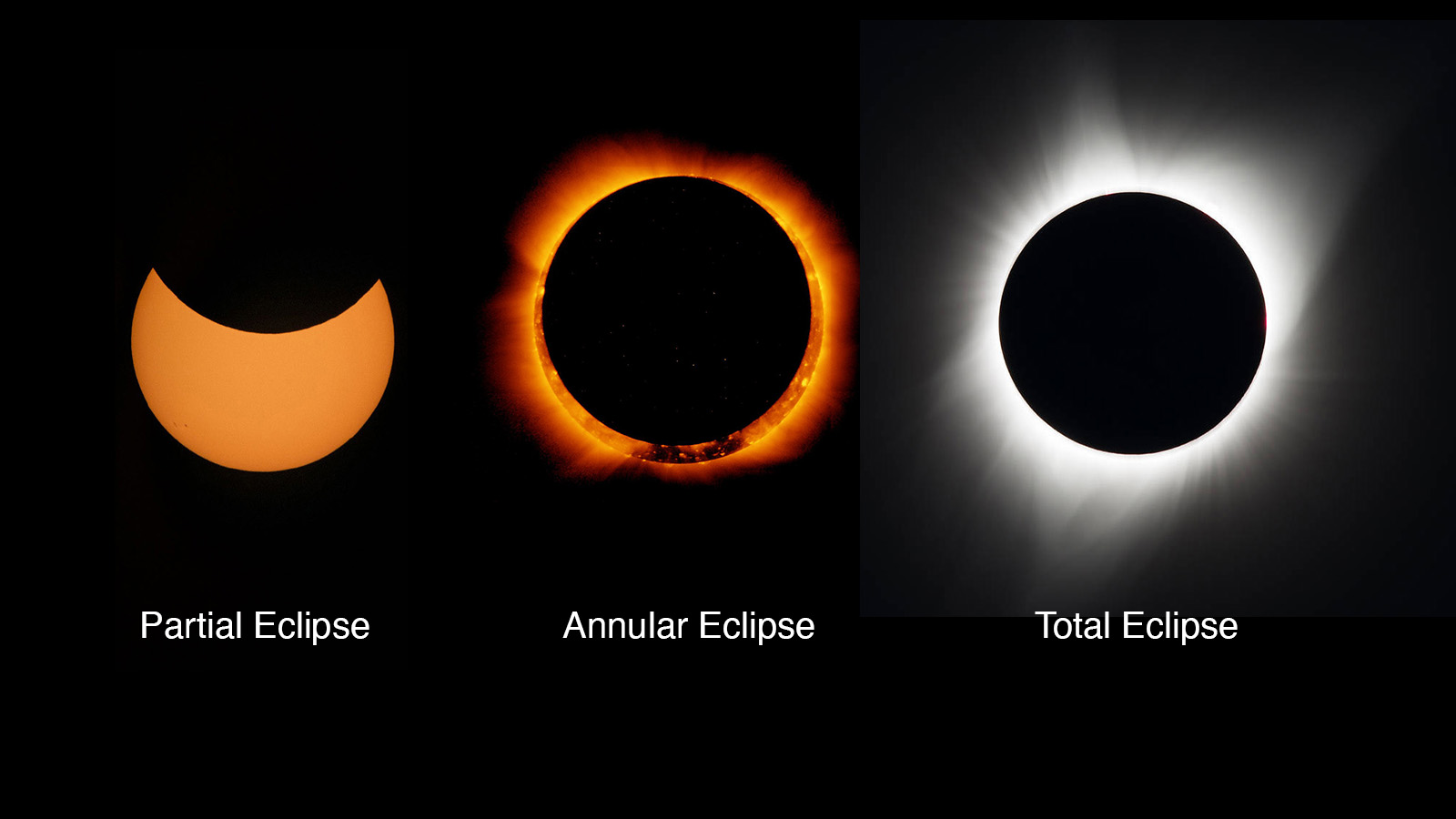
When an eclipse is coming and you are one of the lucky few to be in the shadow path, it becomes a hot topic. Well, for us, it is a hot topic right now. In this article, we will describe our preparation to receive the incoming total eclipse and of course, to photograph it.
Most of the information (not everything) here is taken from the "Be Ecplipsmart - The complete solar eclipse observing guide" authored by Fred and Patricia Espenak.
What Exactly is an Ecplipse of the Sun?
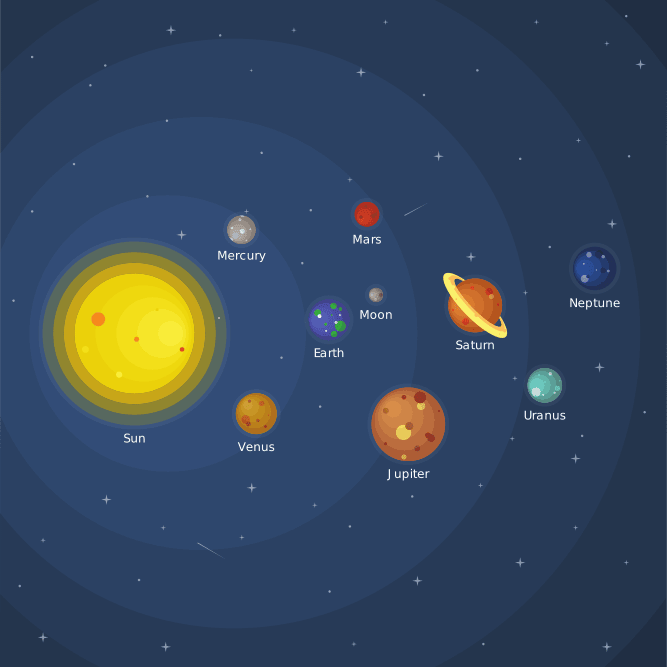
Solar Eclipses are the phenomenon where the Moon happens to be in the right path between the Sun and the Earth, as a consequence, it casts a shadow on the Earth's superfice. You may ask, how this is possible. First, let's compare the sizes of the Sun, the Moon and the Earth. The Sun's diameter is 1.39 M KM (865 thousand miles), the Earth's diameter is 12742 km (7926 miles) and the Moon's is 3474 km (2160 miles). If you round numbers, you can find that the Sun is 100 times larger than the Earth and the Earth is four times larger than the Moon. This means the Sun is 400 times larger than the Moon.
The distance between the Earth and the Sun is about 149 M KM while the distance between the Earth and the Moon is around 384400 km. Rounding numbers, the Sun is 400 times farther away from the Earth than the Moon is. Because of this, the Sun and the Moon appear to be the same size down here.
The following image (by Freepik) shows the proportion of the sizes of the Sun, the planets and the Moon.
New Moon and Relationship with a Solar Eclipse
You can see a new Moon as a "failed eclipse". The Moon is not exactly between the Earth and the Sun. None of the shadows (Umbra, Penumbra or Antumbra) hit the Earth.
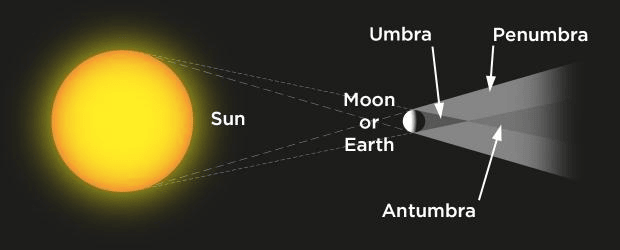
However, every year or two, the Moon's orbit aligns perfectly.
Total vs Annular Ecplise
The first thing to know to understand this is that the Moon's orbit is not circular but elliptical. This explains why sometimes the moon looks bigger. The important thing here is the distance.
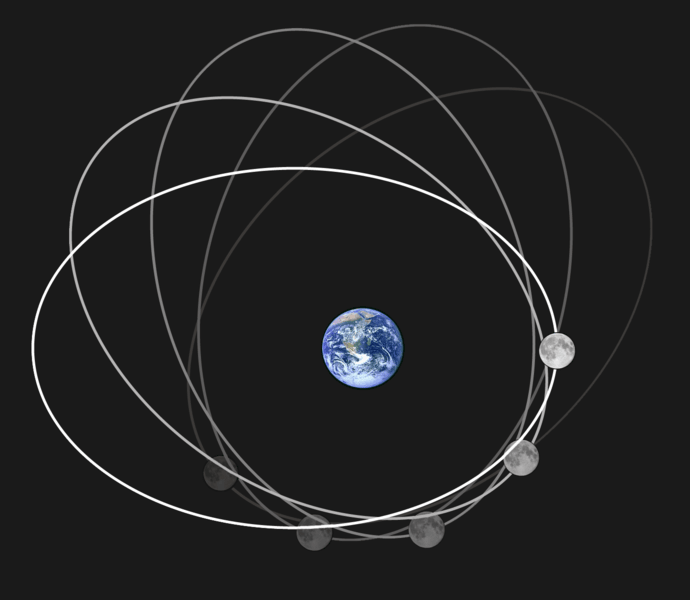
When an annular eclipse happens, the Moon is far from the Earth and the so-called "Rings of Fire" are the product of a moon that can't fully cover the Sun while the shadow that hits the Earth is the Antumbra. When a Total eclipse happens, the Moon is at its closest point to the Earth. It covers completely the Sun and the Umbra is hitting the Earth.
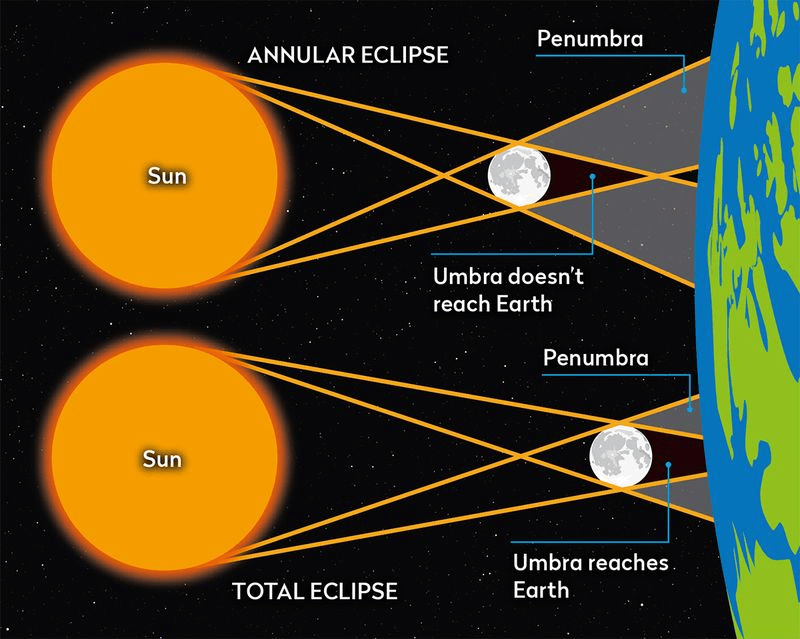
Both eclipses are different spectacles.
What do I need to Photograph an Eclipse?
- A camera, preferably a DSLR or a mirror-less one,
- a lens, preferably 400mm or longer,
- a sturdy tripod,
- a ND100000 filter.
If you are just starting to prepare, you may find challenging to find an ND100000 filter one week before an eclipse. An ND100000 filter provides 16.6-stop light reduction. Light behaviour is logarithm, meaning that the light reduction between 1 stop means the half. An ND2 filter reduces the light by half, while an ND3 filter reduces it four times. So, why is this relevant? If you are not able to find an ND100000 filter, you can get other ND filters and stack them! If you have access to an ND400, you have an 8.6-stop light reduction. The only tradeoff from stacking filters is the sharpness of your image.
What Camera Settings Should I Use?
We highly recommend giving a read to Mr. Eclipse's article "How to Photograph a Total Solar Eclipse". The important part here is you need to know your gear. Some DSLR cameras show unacceptable noise if you use ISO400+, others are noiseless at ISO2000. The higher the ISO, the higher the speed of the shutter will be; having higher speeds produces sharper images.
We also recommend you know how to operate your camera. The corona of an eclipse is something that can not be photographed with an LDR image, it needs to be an HDR if you want to get the full spectrum. Look for how to use the brackets.
Funt Facts for Solar Eclipses
- The Moon's average distance from Earth is slowly increasing by about 2.54 cm (one inch) per year. In about 500 million years, the moon will be too far there will no longer be total solar eclipses on Earth.
- You can see bright planets with the naked eye during totality.
- During an annular eclipse, the Sun's faint corona remains hidden because the "ring of fire" is too bright. Don't ever try to see that with the naked eye, you may have permanent sight damage.
- A total eclipse occurs at any given place on Earth about once every 375 years on average. But some places go for more than 1000 years between total eclipses.
May I see the Eclipse with my Naked Eye?
According to our readings, you shouldn't watch a partial or annular eclipse directly. It seems that it is safe to watch the total eclipse only when it is covered (not before, not after). Please confirm this as we are not eclipse experts.
